It's 3 AM. You're lying awake, flipping from side to side for the fifth time, your back hurts, and your baby bump seems to suddenly have no comfortable position anymore. Does this sound familiar? Up to 75% of all pregnant women know this feeling - sleepless nights are a common part of pregnancy, just like cravings and anticipation. But it doesn't have to stay this way. With the right strategies, you can significantly improve your sleep quality and start the day refreshed.

Why Sleep is so Challenging during Pregnancy
Your body is currently performing at its peak. Hormones like progesterone make you tired during the day but simultaneously disrupt your sleep rhythm. The growing baby bump puts pressure on the bladder, leading to frequent nighttime bathroom trips. Heartburn, leg cramps, and restless legs syndrome often add to the mix.
On top of that is the emotional component: worries about childbirth, excitement for the baby, and thoughts about the future keep your brain busy. All of this is completely normal - and that's exactly why it's so important to consciously develop strategies that help you.
The Most Common Sleep Disruptors at a Glance
- Frequent Urge to Urinate: The uterus puts pressure on the bladder
- Heartburn: Hormones relax the sphincter muscle between the stomach and esophagus
- Back Pain: Additional weight strains the spine
- Breathing Difficulties: The baby presses against the diaphragm
- Restless Legs: Iron deficiency can exacerbate restless legs syndrome
- Thoughts Spinning: Emotional and mental stress

The Optimal Sleep Position: Left is Best
Side sleeping, especially on your left side, is considered the optimal sleep position during pregnancy. It not only relieves pressure on your baby bump but also improves blood flow to the placenta and reduces the risk of the vena cava syndrome – a compression of the large vein that can lead to dizziness and nausea.
I know it can feel strange at first, especially if you're an avid stomach sleeper. But over time, your body will get used to it, and with the right aids, side sleeping can even become quite comfortable.
How to Make Side Sleeping Comfortable
- Use Pregnancy Pillows: A nursing pillow between your knees relieves your hips and back
- Support Your Belly: Place another pillow under your belly for additional support
- Elevate Your Upper Body: An additional pillow under your head helps with heartburn
- Experiment: Try different pillow combinations until you find your perfect arrangement
A small tip: If you wake up at night and realize you're sleeping on your back, don't worry. Your body will wake you up when it gets uncomfortable. Just roll back to your side and continue sleeping.
Your Evening Ritual: The Key to Falling Asleep
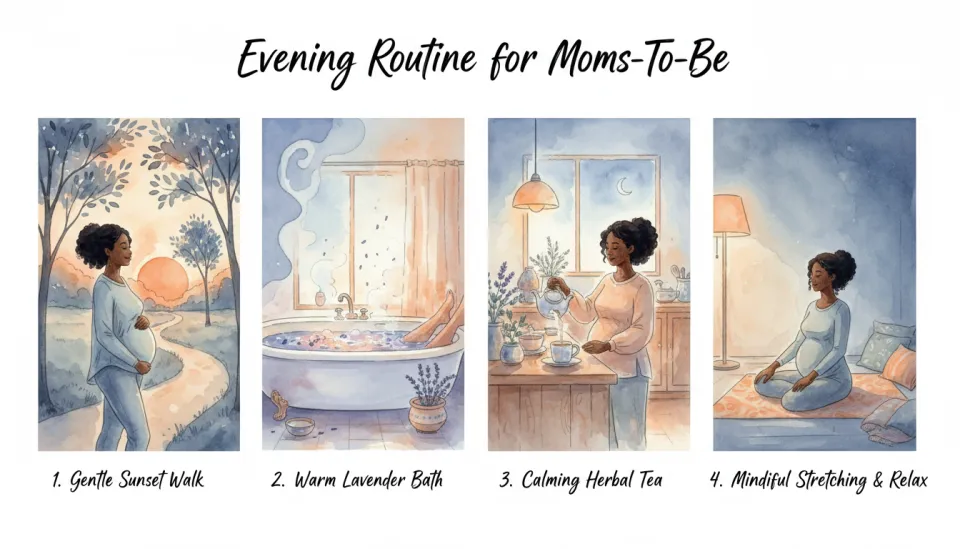
A conscious evening ritual signals to your body: it's time to wind down. Activity in fresh air and a relaxing evening routine promote good sleep. This doesn't have to be complicated - just 20 minutes can make a big difference.
Start your ritual about two hours before bedtime. This gives your body enough time to prepare for a restful night. During this time, avoid bright screen light, stressful conversations, or distressing news.
Building Blocks for Your Personal Evening Ritual
- Evening Walk: 15-20 minutes outdoors, even in cooler weather
- Warm Bath: Maximum of 38 degrees, with calming lavender or chamomile oil
- Relaxation Tea: Chamomile, lemon balm, or hops (no peppermint if you have heartburn)
- Gentle Stretching Exercises: Loose movements for your back, neck, and legs
- Breathing Exercises: 4-7-8 technique (inhale for 4 seconds, hold for 7, exhale for 8)
- Journaling: Write down your thoughts to clear your mind
- Audiobook or Meditation: Guided relaxation exercises specifically for pregnant women

Nutrition for Better Sleep: What and When You Eat Makes a Difference
Heavy, fatty, or heavily spiced meals in the evening, as well as caffeine, can disrupt sleep. Your digestive system works more slowly during pregnancy - if you give it a heavy task in the evening, it will affect your sleep.
This doesn't mean you should go to bed hungry. On the contrary: a light snack about an hour before bedtime can even help, especially if you suffer from nighttime blood sugar drops.
Sleep-Friendly Evening Snacks
- Natural yogurt with banana (contains sleep-promoting tryptophan)
- Whole grain crackers with almond butter
- Warm milk with honey (a classic that really works)
- Oatmeal with a few berries
- A handful of nuts (especially walnuts and almonds)
What to Avoid in the Evening
- Caffeinated drinks (including chocolate!) after 2 PM
- Spicy or heavily seasoned foods
- Greasy, fried dishes
- Large amounts of liquids (to reduce nighttime bathroom trips)
- Citrus fruits and tomatoes if prone to heartburn

The Perfect Sleep Environment: Your Nest for Restful Nights
A dark, cool (about 18 degrees) and quiet bedroom creates optimal conditions for restful sleep. Your bedroom should be a sanctuary of peace - a place your brain associates solely with sleep and relaxation.
18 degrees might initially sound cool, but during pregnancy, your body generates more heat. What used to feel cold to you now feels just right. Give it a try and adjust the temperature to your comfort level.
Checklist for Your Bedroom
- Darkening: Use blackout curtains or a sleep mask
- Temperature: 16-19 degrees, well-ventilated before sleep
- Noise: Use earplugs or a white noise app for disturbing outdoor noises
- Mattress: Medium firmness that supports your changing body well
- Bedding: Breathable natural fibers such as cotton or linen
- Electronics: Put your smartphone away at least an hour before sleep
- Scents: Lavender pillow or a few drops of essential oil (not directly on the skin)
If Sleep Still Doesn't Come: Practical Immediate Help
Sometimes you're doing everything right - and still lying awake. It happens. Instead of getting frustrated and desperately trying to fall asleep (which famously never works), try these strategies:
Acute Tips for Sleepless Nights
- Get Up Instead of Tossing: After lying awake for 20 minutes, get up and do something quiet (read, knit, listen to soft music)
- Thought Download: Write down what's on your mind - often just writing it down helps
- Progressive Muscle Relaxation: Tense and consciously relax different muscle groups in turn
- Visualization: Imagine a safe, peaceful place - with all your senses
- Practice Acceptance: Sometimes the thought helps: 'Resting is valuable too, I don't have to sleep'
Important to know: If sleep problems persist for several weeks and significantly impair your quality of life, talk to your midwife or doctor. Sometimes treatable causes like iron deficiency, thyroid problems, or sleep apnea may be involved.
When to Seek Professional Help
- Severe snoring with pauses in breathing (possible sleep apnea)
- Extreme daytime sleepiness despite sufficient lying time
- Severe anxiety or depressive moods
- Very strong leg discomfort (restless legs)
- Sleep problems that leave you completely exhausted
Sleep problems during pregnancy are common, but they don't have to be your constant companion. With the right strategies - the optimal sleep position, a conscious evening ritual, sleep-friendly nutrition, and a comfortable sleep environment - you can significantly enhance your nights. Be patient with yourself, try different approaches, and discover what works best for you. Your body is doing incredible things - it deserves restful sleep. And so do you.
Medical Disclaimer
The information provided in this article is for educational purposes only and is not intended as a substitute for professional medical advice, diagnosis, or treatment. Always seek the advice of your physician or other qualified health provider with any questions you may have regarding a medical condition. Never disregard professional medical advice or delay in seeking it because of something you have read on this website.
Similar Posts
4-7-8 Breathing Technique: From Pregnancy Anxiety to Inner Calm in 90 Seconds
Your heart races, thoughts spin – pregnancy fears can be overwhelming. The 4-7-8 breathing technique is your gentle tool...
Insomnia in the Third Trimester: 8 Proven Strategies for Restful Nights
64 percent of all pregnant women sleep poorly in the third trimester. Discover why your body can’t rest at night and wha...
Fear of Miscarriage in the First Trimester? These Facts Bring You Confidence
The first weeks of your pregnancy are filled with anticipation and uncertainty. Discover what the numbers really mean, h...
Baby Blues or Postpartum Depression? These 3 Warning Signs You Should Know
Unexplained tears, exhaustion, mood swings – many mothers experience a whirlwind of emotions after childbirth. But when ...