It’s three o’clock in the morning, you’re at the changing table, your baby is crying, and the thoughts in your head are racing: «Why can’t you get this right? Other mothers manage just fine.» This inner voice—it can be ruthless, can’t it? You would never speak to your best friend this way. The good news is that you can learn to treat yourself more gently. Self-compassion isn’t some esoteric concept; it’s a scientifically backed tool from cognitive behavioral therapy—and it changes how you feel as a mother.

Why Self-Compassion is Especially Important for Mothers
Being a mother often means constantly giving—often at the expense of forgetting yourself. Studies show that mothers with high self-compassion suffer less from anxiety, depression, and burnout. Why? Because they allow themselves to be human. Mistakes are part of the journey. Feeling overwhelmed is normal. And you can still be good to yourself.
Self-compassion has three pillars: kindness towards yourself (instead of self-criticism), a sense of connection (you are not alone), and mindful awareness (recognizing feelings without judgment). These three elements help you step out of the spiral of guilt and shame.
7 Gentle Ways to Speak More Compassionately to Yourself
1. Talk to Yourself Like You Would to Your Best Friend
Imagine your best friend tells you she yelled at the baby today and feels terrible. What would you say? Probably something like: «You’re exhausted. That happens. You’re still a good mom.» Exactly those words you can also say to yourself. Write yourself a short letter during your next crisis—from the perspective of your kindest friend.
2. Name Your Feelings Without Judgment
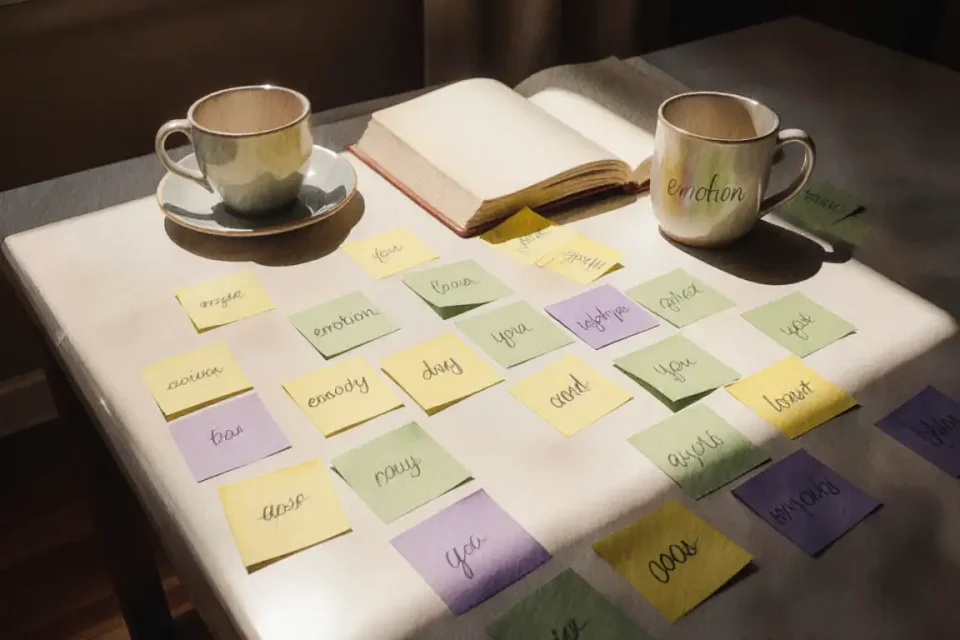
Instead of saying, «I’m such a failure,» try: «I’m feeling overwhelmed right now.» This small difference is huge. You’re describing a feeling, not an identity. Feelings come and go—they do not define you. This technique is called cognitive defusion and helps you gain distance from negative thoughts.
3. Use the “Humanity Reminder”
The next time you feel bad, tell yourself: «This is a moment of human suffering. All mothers can relate. I am not alone.» This sentence comes from the self-compassion research of Kristin Neff. It reminds you that difficulties are part of life—you are not defective just because it’s hard.
4. Replace “I have to” with “I get to”
Small changes in wording can have a huge impact. Instead of saying «I have to breastfeed now,» try «I get to nourish my baby.» Or instead of «I have to clean up the mess,» say «I get to create a space where I can breathe.» The word get gives you autonomy back—and takes the pressure off.
5. The “Hand on Heart” Exercise (1 Minute)
When the inner critic gets loud, place one hand on your heart. Feel the warmth. Take a deep breath and softly say: «I am enough. I am doing my best.» This physical gesture activates your parasympathetic nervous system—you signal to your body: I am safe. This calms you immediately.

6. Rewrite Your Core Beliefs
Many of our self-critical thoughts are old beliefs. Take a pen and write:
- Old belief: «Good mothers are never annoyed.»
- New belief: «Good mothers are humans with limits—and may show them.»
- Old belief: «I should manage all of this on my own.»
- New belief: «Asking for help is a sign of strength, not weakness.»
Read your new beliefs out loud. Repetition forms new neural pathways—your brain learns to think differently.
7. Celebrate Small Wins
Every night before going to bed, write down three things you did well today. Even tiny things count: «I apologized.» «I got five minutes of fresh air.» «I read to my child despite being tired.» This practice is called positive reinforcement—and it trains your brain to see the good.

What To Do When the Inner Critic is Particularly Loud?
Sometimes gentle self-talk isn’t enough—the thoughts keep racing anyway. Then the «thought-stopping technique» can help: Internally (or aloud) say «Stop!» and visualize a red stop sign. Then consciously switch to a compassionate statement: «I am having a hard time right now. And that is okay.»
Another strategy: Externalize the critic. Give her a name (e.g., «Ms. Perfect») and recognize that she is not you—just a part of you that wants to protect you, but is overreacting. You can thank her and still choose to act differently.
Frequently Asked Questions About Self-Compassion in Motherhood
Isn't self-compassion selfish?
No. Self-compassion doesn’t mean you’re shirking responsibility. It means you’re not punishing yourself additionally. Studies show: Mothers with more self-compassion are more patient with their children—because they are emotionally filled themselves.
What if I don't feel "worthy"?
That’s exactly when you need self-compassion the most. Start small: Tell yourself one kind thing every morning. Your brain will get used to it—feelings often follow later.
How long does it take until I think differently?
Change takes time. But even after just two weeks of daily practice (5–10 minutes), many mothers report noticeable differences. Be patient with yourself—this, too, is self-compassion.

Your First Step Today
You don’t have to change everything at once. Choose one exercise that feels right for you—perhaps the “Hand on Heart” gesture or rewriting a belief. Try it out daily for a week. Observe what happens. Self-compassion is like a muscle: The more often you train it, the stronger it gets.
And remember: You deserve the same kindness you so generously offer to your child. That gentle voice inside you is there—you just need to give it more space.
Medical Disclaimer
The information provided in this article is for educational purposes only and is not intended as a substitute for professional medical advice, diagnosis, or treatment. Always seek the advice of your physician or other qualified health provider with any questions you may have regarding a medical condition. Never disregard professional medical advice or delay in seeking it because of something you have read on this website.
Similar Posts
4-7-8 Breathing Technique: From Pregnancy Anxiety to Inner Calm in 90 Seconds
Your heart races, thoughts spin – pregnancy fears can be overwhelming. The 4-7-8 breathing technique is your gentle tool...
Insomnia in the Third Trimester: 8 Proven Strategies for Restful Nights
64 percent of all pregnant women sleep poorly in the third trimester. Discover why your body can’t rest at night and wha...
Fear of Miscarriage in the First Trimester? These Facts Bring You Confidence
The first weeks of your pregnancy are filled with anticipation and uncertainty. Discover what the numbers really mean, h...
Baby Blues or Postpartum Depression? These 3 Warning Signs You Should Know
Unexplained tears, exhaustion, mood swings – many mothers experience a whirlwind of emotions after childbirth. But when ...